Tired of Email Marketing Friction? Why Shopify Merchants Are Moving to Native Platforms
We've all been there: a tool that 'works fine' but constantly demands workarounds. Recently, a lively community discussion popped up around this very issue, with an original poster sharing their frustration about managing Mailchimp with their Shopify store. They highlighted the constant friction with abandoned cart flows, winback campaigns, and customer segmentation based on purchase history. It's a common dilemma, and the community's insights offer a clear path forward for many Shopify merchants.
The Mailchimp-Shopify Friction: A Common Pain Point
The core of the issue, as several community members pointed out, is that Mailchimp was designed as a general-purpose email tool. While it can integrate with Shopify, its e-commerce layer often feels 'patched on.' This means when you want to leverage granular Shopify data – like segmenting customers who 'bought X but not Y,' or creating flows based on specific product interactions – you end up fighting the tool. One respondent perfectly summed it up: it's less about 'Mailchimp vs. another platform' and more about 'how much Shopify logic do I have to maintain by hand?'
This friction isn't just an annoyance; it's a drain on time and resources. As one expert noted, we often compare subscription prices but rarely calculate the 'cost of friction' – the hours spent each month compensating for platform limitations. If your team is spending 20 hours a month troubleshooting integrations or manually segmenting, that's a significant hidden cost.
Why Shopify-Native Email Platforms Shine
The consensus from the community is clear: platforms built specifically for e-commerce, and especially for Shopify, make a world of difference. Tools like Klaviyo, Omnisend, Drip, and others were frequently mentioned as superior alternatives. Why? Because they are built around understanding purchase behavior natively. Abandoned cart, abandoned checkout, product recommendations, segmenting by what someone bought (or didn't buy) – these just work, without the constant need for workarounds.
One merchant shared how moving to a Shopify-native platform allowed them to build a segment like "bought this product but not the refill, and hasn't opened anything in 30 days" in one go. This kind of sophisticated segmentation is crucial for personalized marketing that drives conversions and builds customer loyalty.
Navigating the Migration: A Strategic Approach
The idea of migrating can be daunting, and the community acknowledged this dread. However, they also agreed it's usually worth it in the long run. The key is to approach migration strategically:
- Document Everything: Before you even think about switching, make a detailed inventory of every flow, trigger, exclusion, segment, form, and integration you currently have. This prevents 'migrating years of clutter' and ensures you don't miss critical logic.
- Simplify and Prioritize: As one helpful expert suggested, mark each current flow as 'keep,' 'simplify,' or 'kill.' Focus on rebuilding your highest-impact workflows first: abandoned cart, post-purchase, repeat purchase/VIP, and winback.
- Test with Real Data: Before a full switch, test these critical workflows in the new platform using real Shopify data. This helps ensure segmentation and troubleshooting become noticeably easier, validating the move.
- Expect a Learning Curve: The first few weeks won't be easier. Be prepared to rebuild or QA elements like automation triggers, signup forms, discount codes, and reporting. Attribution won't perfectly match your old system, so be ready to adapt.
- Leverage Migration Support: Some platforms, as one respondent noted, offer hands-on migration support, handling contacts, workflows, and segments for you. This can significantly smooth the transition.
EShopSet Team Comment
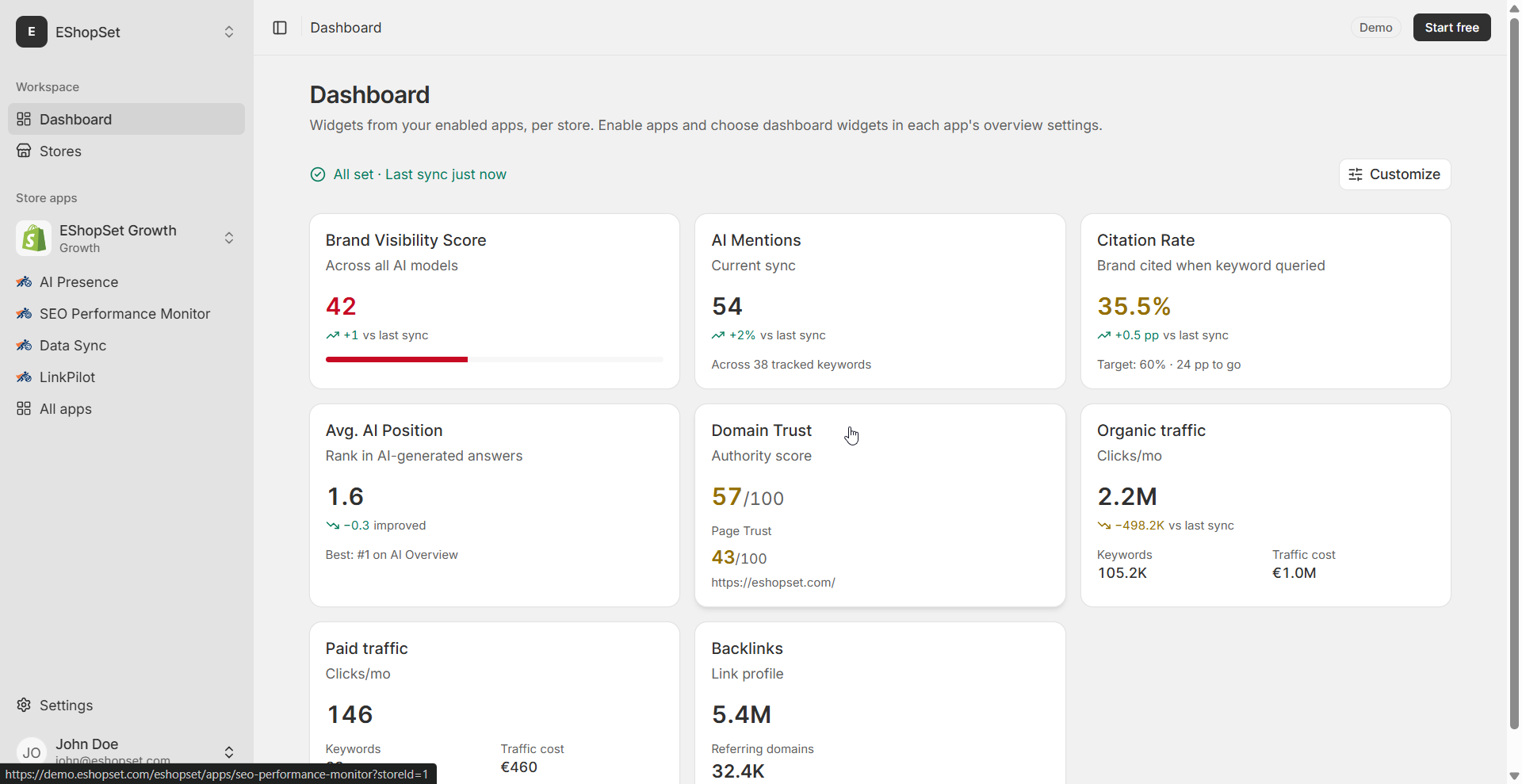
This discussion perfectly highlights how crucial purpose-built tools are for Shopify merchants. While EShopSet doesn't replace your email marketing platform, our apps are designed to eliminate similar friction points in other daily operations. For instance, maintaining a strong Shopify domain trust score is vital for email deliverability and overall store visibility, which our SEO Performance Monitor helps you track. AI Presence can elevate your email content, ensuring your messages resonate with customers, while Sheet2Cart streamlines product data management, ensuring your catalog is always ready for dynamic email campaigns. Consider our EShopSet Growth plan Shopify bundle for a comprehensive approach to daily operational excellence.
The Long-Term Payoff
Ultimately, the decision to move off a general-purpose email platform for a Shopify-native solution comes down to efficiency and growth. If your current setup requires constant workarounds, it's not just costing you time; it's limiting your ability to connect with customers effectively and grow your store. By embracing tools that truly understand your Shopify data, you free up valuable time to focus on strategy, content, and building stronger customer relationships, ensuring your email marketing efforts contribute meaningfully to your bottom line and improve your Shopify domain trust score for better overall performance.