Navigating the Tax Maze: Why 'All-Inclusive' Pricing Can Cost Your E-commerce Store More Than You Think
Every store owner dreams of simplifying things for their customers. Clear, straightforward pricing with no surprises at checkout is a common goal. This often leads to the idea of "all-inclusive" pricing, where the advertised price already covers any applicable taxes, and the merchant simply absorbs the cost. It sounds appealing, doesn't it?
Recently, a fascinating discussion popped up in an online community, sparked by an original poster wondering if they should just turn off Shopify Tax in all regions and switch to "Basis Tax" because their prices were all-inclusive. They wanted to avoid charging customers taxes separately, choosing instead to absorb the cost themselves.
The conversation that followed was a masterclass in the complexities of e-commerce operations and tax compliance. Let's dive into what the community had to say and why this seemingly simple approach can quickly become a minefield for store owners running on platforms like Shopify, WooCommerce, Magento, Wix, BigCommerce, or PrestaShop.
The Hidden Costs of "All-Inclusive" Tax Absorption
While the intent behind absorbing taxes is admirable – to keep things simple for customers – the reality is far from it. As several community members pointed out, you're still legally obligated to pay those taxes to the government, regardless of whether you itemize them for your customer. One respondent put it bluntly: "Just because you make it all inclusive doesn't mean you aren't obligated to pay the taxes."
Why it's a Slippery Slope:
- Competitive Disadvantage: Imagine your product is listed at $100 (tax-inclusive), while a competitor lists theirs at $90 (plus tax). To a customer browsing, your price appears higher, potentially driving them away before they even reach checkout. This can undermine even the most robust Wix advanced seo recommendations and marketing efforts, as perceived value is often a first impression.
- Accounting Nightmares: Manually calculating the tax portion of each sale, especially when rates vary, is a monumental task. One community member warned, "Your accountant is going to hate you." This isn't just about simple arithmetic; it involves understanding nexus, varying rates by jurisdiction (state, county, city), and product-specific taxability.
- Legal Compliance and Audits: Sales tax is incredibly complex. Failing to properly calculate, collect, and remit taxes can lead to severe penalties, interest, and audits. As one community member noted, "you are going to have one helluva problem when you get audited."
The Perils of Manual Tax Management Across Jurisdictions
The idea of switching to a "basic tax" setting and handling taxes manually might seem like a way to save on platform fees or gain more control. However, the community thread quickly highlighted the impracticality and danger of this approach, especially for businesses serving customers in diverse locations.
Key Challenges:
- Varying Rates: Taxes are rarely uniform. In the US, sales tax can differ by state, county, and even city. Canada has varying GST/HST rates by province, and some provinces have their own PST. A community member emphasized, "The only time taxes would be the same is if they were all in the same jurisdiction. Nobody runs a successful e-commerce business that way."
- Disclosure Requirements: Some regions have strict rules about how tax-inclusive pricing must be displayed. For instance, in California, vendors must clearly state that "All prices of taxable items include sales tax reimbursement computed to the nearest cent." In Texas and Pennsylvania, simply absorbing the tax without itemization or explicit disclosure is generally not allowed.
- Time and Error: While one community member suggested it's "not that hard to work out backwards" by exporting sales reports, others strongly disagreed. The sheer volume and complexity for a growing e-commerce business make manual calculation prone to errors and incredibly time-consuming. As a community member succinctly put it, "If doing this manually is going to save you money vs using a service, then you value your time much lower than I value mine."
Leveraging Technology for Seamless Tax Compliance
The consensus from the community is clear: automated tax solutions are not just a convenience; they are a necessity for modern e-commerce. Platforms like Shopify, WooCommerce, Magento, Wix, and BigCommerce offer built-in tax features or robust integrations with specialized tax apps precisely because of this complexity.
For store owners, the focus should be on leveraging these tools effectively rather than trying to circumvent them. This is where EShopSet comes in. EShopSet is an apps-first commerce operations bundle designed to help store owners manage their entire ecosystem of applications, ensuring smooth, compliant, and efficient operations.
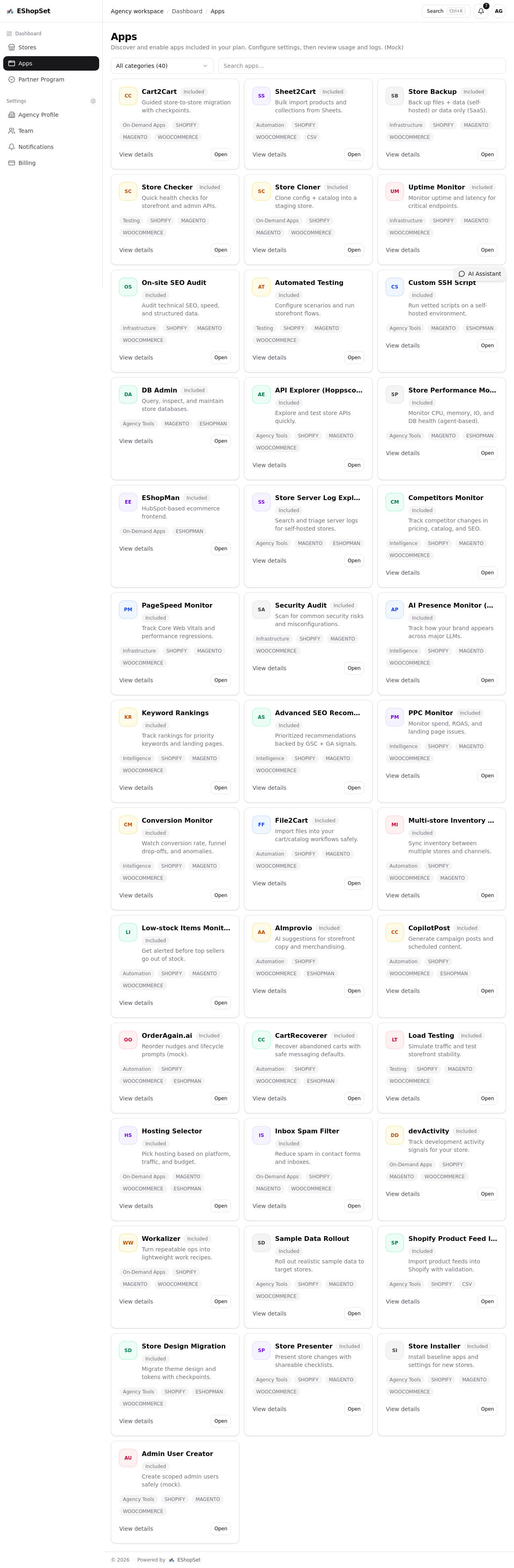
While EShopSet doesn't directly calculate your sales tax, it provides the critical infrastructure to manage the apps that do. You can discover tax compliance apps in our marketplace, enable them per store, configure their settings, and track their usage and logs. This holistic approach ensures that your tax solution, alongside all your other vital apps (for inventory, shipping, SEO, etc.), is running optimally and is properly managed.
Pro Tip: Before making any significant changes to your store's tax settings or integrating new financial apps, always perform an ESHOPMAN backup before update. This safeguard ensures that your critical store data is protected, allowing you to revert to a stable state if any unforeseen issues arise. EShopSet's monitoring tools help you keep track of all app activities and changes.
Managing multiple apps for different aspects of your store, from SEO to inventory to tax, can be overwhelming. EShopSet simplifies this by providing a unified control center where you can oversee all your operational apps. This includes monitoring their performance, understanding their impact on your store, and ensuring their settings align with your business strategy and compliance needs. Agencies, in particular, benefit from managing multiple stores from a single, powerful control center.
Best Practices for Tax Management in E-commerce
To navigate the complexities of e-commerce tax compliance successfully, consider these best practices:
- Consult a Tax Professional: This was a unanimous recommendation in the community thread. Tax laws are constantly changing and highly specific to your business location, customer locations, and product types. Professional advice is invaluable.
- Leverage Automated Solutions: Utilize your e-commerce platform's built-in tax features or integrate with specialized tax compliance apps. These tools are designed to handle the intricate calculations and reporting requirements across various jurisdictions.
- Ensure Transparency: Where required by law, make sure your customers understand how taxes are applied, even if your prices are generally inclusive. Clear communication builds trust and avoids legal issues.
- Maintain Meticulous Records: Regardless of your pricing strategy, you must keep accurate records of all sales, taxes collected (or absorbed), and remittances. EShopSet's logging features can assist in tracking app activities related to these critical operational aspects.
- Regularly Review Settings: Tax laws change. Periodically review your store's tax settings and app configurations to ensure they remain compliant. EShopSet's centralized settings management makes this process much smoother.
Conclusion
The desire to simplify pricing for customers is understandable, but attempting to absorb taxes without proper calculation and compliance is a risky endeavor. The community discussion underscores that while the intention is good, the operational and legal complexities far outweigh any perceived simplicity. Instead of creating unnecessary headaches and potential legal liabilities, embrace the power of technology and expert advice.
By leveraging robust operational bundles like EShopSet, you can effectively manage the essential apps that handle your tax calculations, monitor their performance, and maintain a compliant and thriving e-commerce business. Don't let tax complexities become a roadblock; turn them into an opportunity for operational excellence.