Navigating Google's Indexing Maze: Why Your Shopify Pages Might Be Stuck in 'Crawled - Not Indexed'
Hey there, fellow Shopify merchants and store operators! We've all been there – the thrill of launching new product pages or revamping existing ones, only to be met with the frustrating silence of Google's index. Recently, a vibrant online community discussion caught my eye, perfectly articulating a common pain point: pages getting stuck in the dreaded "Crawled – currently not indexed" status.
The original poster shared their struggle after a significant technical setup change, including a large batch of URL prefix removals. They noticed a marked slowdown in indexing, with many pages lingering in that limbo state, despite tools like Screaming Frog and Google URL Inspection reporting them as perfectly indexable. Sound familiar? You're definitely not alone.
Understanding "Crawled – Currently Not Indexed"
Many community members chimed in with similar experiences, with one even noting the issue starting as early as April or May, suggesting it's "the new normal." But here's the crucial insight: "Crawled – currently not indexed" isn't a technical error. As one particularly insightful respondent pointed out, it means Google successfully fetched your page but has actively decided not to include it in its index. It's a priority call, not a technical defect. Your page can be indexed, but Google has chosen not to, likely because it doesn't perceive enough value or authority to warrant its inclusion at that moment.
This status highlights a fundamental shift: Google is making it harder and harder to get indexed, especially as it battles what some community members referred to as the "AI slop flood." This means the bar for quality and relevance is higher than ever.
The Authority Angle: Why It Matters More Than Ever
A recurring theme in the discussion was the paramount importance of "authority." One expert contributor emphasized that authority isn't something that happens "after" SEO; it is SEO. Google won't index pages without authority because authority dictates ranking. So, where do you get this elusive authority for your Shopify product or content pages?
- Internal Linking: Make sure relevant internal pages with strong keywords link to your target pages. This helps Google understand the context and importance of your new content.
- External Links: Quality backlinks from reputable sources are still a gold standard for building authority.
- Site Authority: Develop overall site authority by consistently producing high-quality, relevant content across your store. This builds trust with Google over time.
Navigating URL Migrations: The Hidden Pitfall
The original poster's situation involved a "significant technical setup change" and "prefix removal," which one respondent wisely identified not as slow indexing of existing pages, but as a full-blown URL migration. This is a critical distinction for Shopify merchants!
When you change URLs, every page at a new address is, to Google, a brand-new page that must earn its indexing from scratch. The old URLs still hold whatever trust and authority they had. If your old URLs aren't 301 redirecting cleanly to the new ones, or if your sitemap mixes both old and new, you're essentially resetting the clock and confusing Google.
Actionable Steps for URL Migrations:
- Verify 301 Redirects: Ensure every old-prefix URL 301 redirects permanently to its new counterpart. This tells Google the page has moved and passes on any existing authority.
- Sitemap Hygiene: Your sitemap should only contain the new, canonical URLs. Make sure the
lastmoddates are honest and reflect actual updates. - Stop Churning URLs: Once a migration is underway, avoid further URL structure changes. "Churning URLs mid-evaluation resets the clock," as one community member noted. Let Google re-evaluate your site's new structure.
Consistent Data, Consistent Indexing
Beyond authority and migrations, simply ensuring your product data is consistent and accurate plays a foundational role. Keeping your Shopify store's data pristine is key, and this often involves a weekly Shopify catalog sync to ensure all product details, inventory, and pricing are up-to-date. This consistency signals reliability to Google, helping it trust your content more.
EShopSet Team Comment
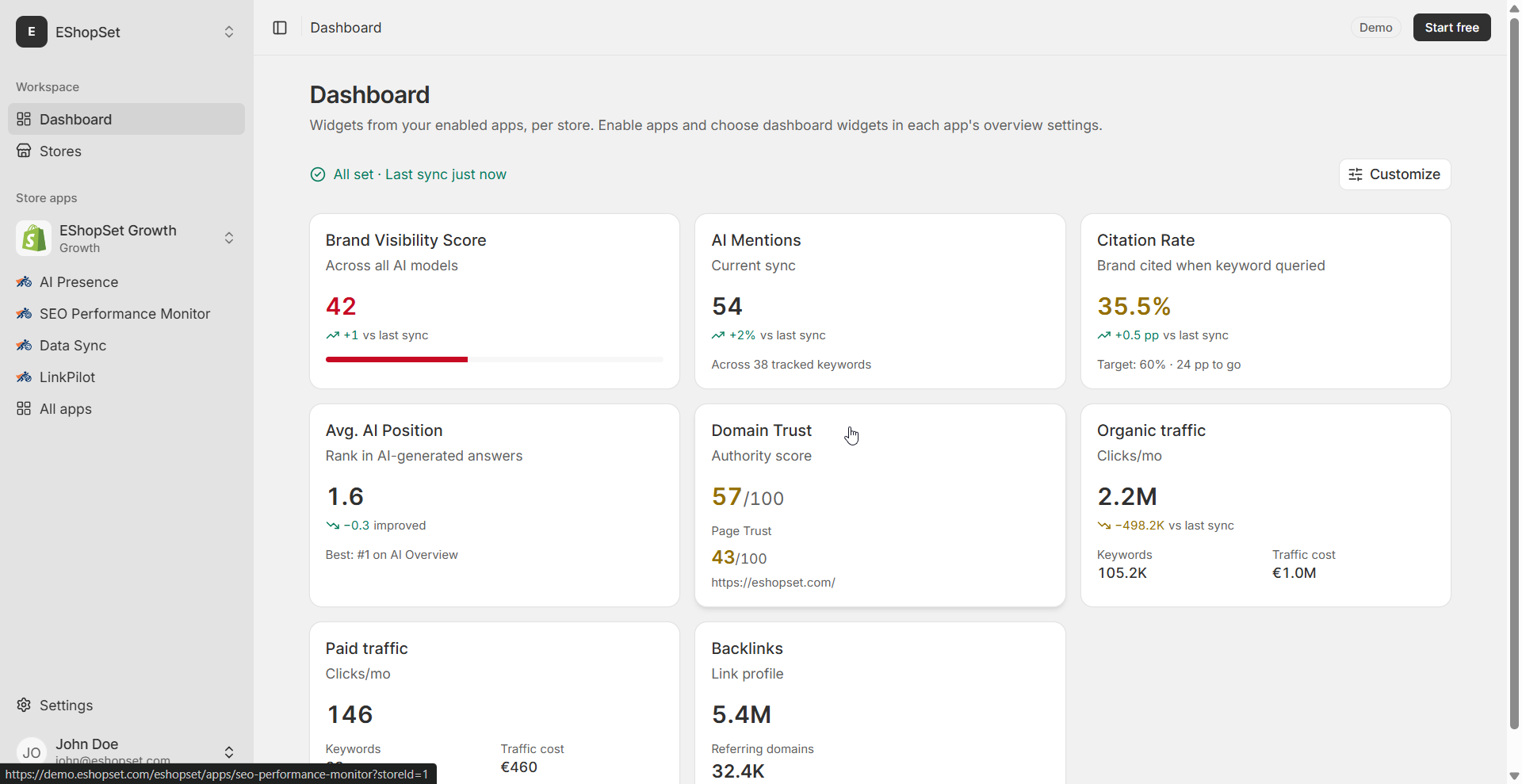
This discussion perfectly illustrates the evolving challenges Shopify merchants face with Google indexing. While Google's algorithms can seem opaque, the core takeaways – authority, technical hygiene, and high-quality content – remain constant. Our SEO Performance Monitor app is designed to help you track these exact indexing statuses and identify issues early, while AI Presence empowers you to create the unique, valuable content Google now demands. Furthermore, ensuring your product data is always accurate through Sheet2Cart provides the solid foundation necessary for Google to confidently crawl and index your offerings. For merchants looking for a comprehensive solution, the EShopSet Pro plan Shopify offers advanced features across our app bundle, helping you not just monitor, but actively improve your store's SEO, AI visibility, and data management.
Bringing It All Together
The bottom line? Google isn't just indexing everything anymore. It's making a judgment call on the value and authority of your content. If you're seeing pages stuck in "Crawled – currently not indexed," don't just request indexing repeatedly or rewrite pages aimlessly. Instead, focus on:
- Auditing your URL structure: Especially if you've made recent changes.
- Building genuine authority: Both on-page through excellent content and off-page through quality links.
- Maintaining data consistency: A clean, up-to-date product catalog is fundamental.
- Patience and Monitoring: It took one community member's stuck pages two months and a couple of external links to start gaining impressions. Use tools to monitor your "Discovered to Indexed" conversion rate, not just the total indexed count, which lags.
It's a challenging landscape, but by focusing on these core principles, Shopify merchants can significantly improve their chances of getting their valuable content seen by Google and, more importantly, by their customers.