Cross-Selling on Shopify: Boosting Sales Without Breaking Your SEO Silos
Hey there, fellow Shopify merchants and store operators! We recently spotted a really insightful question popping up in a community discussion that many of you are likely pondering: "Does cross-selling affect silo structures?" It's a fantastic question, and one that gets right to the heart of balancing sales tactics with solid SEO fundamentals. Let's dive in and unpack this.
Understanding SEO Silos: Your Foundation for Authority
First, a quick refresher on SEO silos. Think of them as the logical, hierarchical organization of your store's content and product pages. You create these "silos" by grouping related pages together, usually through careful internal linking and URL structures. The goal? To establish clear topical authority for specific categories within your niche. For example, if you sell apparel, you might have a "Women's Dresses" silo, with sub-categories like "Evening Dresses," "Casual Dresses," and individual product pages all linking strategically within that silo.
This structure tells search engines, "Hey, we're experts on women's dresses!" It concentrates link equity and relevance, helping your key category and product pages rank higher for their target keywords.
The Cross-Selling Conundrum: A Double-Edged Sword?
The original poster's concern is totally valid. Cross-selling is a powerful way to increase average order value and improve the customer journey. You show customers related products they might love – "Customers who bought X also bought Y." But here's the catch: if you're linking from a page deep within your "Evening Dresses" silo to a completely unrelated "Men's Accessories" page as a cross-sell, could that dilute the topical focus of your dress pages? Could it send mixed signals to search engines about what that page is truly about?
The short answer is: yes, cross-selling can affect silo structures, but it doesn't have to be a negative impact. It all comes down to how you implement it.
Best Practices for Harmonious Cross-Selling & SEO
The key is to integrate cross-selling in a way that enhances, rather than detracts from, your SEO efforts. Here’s how:
1. Prioritize Contextual Relevance
This is paramount. Cross-sell products should be genuinely related to the main product on the page. If a customer is looking at a specific running shoe, suggesting running socks or a fitness tracker makes perfect sense and maintains topical relevance. Suggesting a kitchen blender, however, would be off-topic and could indeed dilute your silo's focus.
2. Use Strategic Internal Linking
When you link to cross-sell products, use descriptive and relevant anchor text. Ensure these links appear in dedicated "Recommended Products," "Related Items," or "Frequently Bought Together" sections. Search engines are smart; they understand that these sections serve a different purpose than your primary navigation or core silo links. They're typically seen as secondary, user-experience-driven links rather than strong indicators of a page's primary topic for silo purposes.
3. Don't Overdo It
A few highly relevant cross-sells are far more effective than a massive block of loosely related items. Quality over quantity applies here for both user experience and SEO.
4. Monitor Your Performance Closely
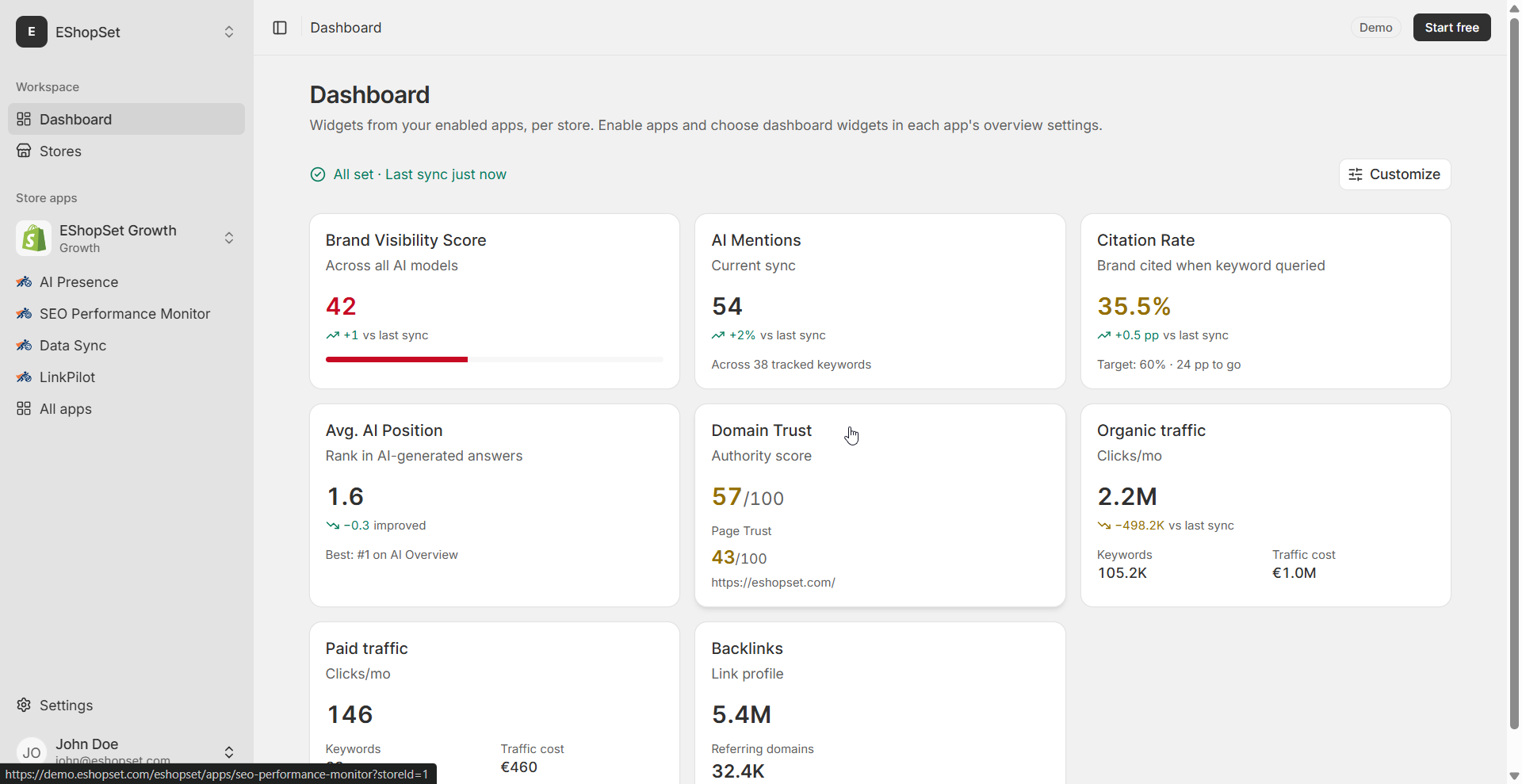
After implementing or tweaking your cross-selling strategy, it's crucial to keep an eye on your SEO performance. Are your target pages still ranking well? Is organic traffic stable or improving? A reliable SEO Performance Monitor can give you the insights you need to quickly identify any unintended negative impacts and adjust your strategy.
5. Ensure Impeccable Product Data Management
Effective cross-selling relies heavily on accurate product information. If your product data is messy, your recommendations will be too. This is where tools like a robust Shopify Data Sync app become invaluable. For instance, if you're managing a complex catalog with many variations, ensuring seamless Shopify variant SKU sync Google Sheets can prevent errors. Keeping your product details, including all variants and SKUs, perfectly synchronized ensures that your cross-sell recommendations are always accurate and relevant, thus supporting your contextual linking efforts.
6. Leverage AI for Smarter Recommendations
While not directly about silo structure, using AI to power your cross-sell recommendations can significantly improve their relevance. Tools harnessing AI, much like our AI Presence app aims to do for your overall visibility, can analyze customer behavior and product attributes to suggest items that genuinely complement each other. This leads to better user engagement and indirectly supports your SEO by keeping visitors on topically relevant paths.
EShopSet Team Comment
The original poster raised a critical question that many Shopify merchants grapple with. We wholeheartedly agree that cross-selling, while a powerful revenue driver, demands careful consideration to avoid undermining your hard-earned SEO silo structures. Done correctly, it can actually strengthen topical authority by providing relevant internal links. Our SEO Performance Monitor is invaluable here, helping you track the impact of your cross-sell strategies on keyword rankings and page health. Meanwhile, Sheet2Cart ensures your product data, including all those crucial variants and SKUs, is always accurate and ready for effective cross-selling, preventing data inconsistencies that could affect recommendations. And for truly smart recommendations, consider how tools like AI Presence can help surface the most relevant products without disrupting your SEO.
In conclusion, cross-selling and SEO silos don't have to be at odds. By focusing on relevance, strategic linking, consistent data, and continuous monitoring, you can enjoy the benefits of increased sales while simultaneously strengthening your store's search engine authority. It's all about thoughtful implementation and making sure every link serves a purpose, both for your customers and for Google.