Beyond the Dashboard Drama: Smarter SEO Reporting for Shopify Merchants
Hey there, fellow Shopify merchants and store operators! Let's talk about something that probably hits a nerve for many of you: SEO reporting. We often rely on tools to help us understand our performance, but what happens when those tools become more of a headache than a help?
I recently stumbled upon a fascinating community discussion that perfectly encapsulated this frustration. The original poster kicked things off by asking if anyone else shared their disdain for Google Data Studio (now Looker Studio), describing it as "completely buggy" and a massive time-sink due to "system configuration error" after error. Sound familiar?
The Data Studio Dilemma: A Shared Frustration
It's clear from the thread that the original poster isn't alone. Many of us have spent countless hours wrestling with connectors, trying to debug dashboards, and just wishing our SEO data would simply *work* for us. The promise of a free, flexible reporting tool is enticing, but the reality often involves a steep learning curve, constant troubleshooting, and a feeling that you're spending more time building reports than acting on insights.
One community member chimed in, suggesting that Looker Studio, while once good, has become a "relic" in the age of advanced AI and Large Language Models (LLMs). This is a crucial point. They argued that when you can plug LLMs directly into your data or feed them downloads for analysis, a static, often clunky dashboard builder feels outdated. The expectation now is for data to be conversational, intelligent, and immediately actionable, not something you have to painstakingly configure.
For Shopify merchants, time is precious. Every minute spent battling a reporting tool is a minute not spent optimizing product listings, engaging with customers, or planning your next big sale. We need tools that don't just show us data, but tell us what to do with it, and ideally, even alert us when something needs attention.
Moving Beyond Manual Reporting: What Modern Merchants Need
The core of the problem, as highlighted by the community, is the disconnect between a general-purpose reporting tool and the specific, fast-paced needs of ecommerce SEO. Here's what modern Shopify store operators really need:
- Automated, Real-time Insights: Forget manual refreshes or complex queries. You need to know what's happening with your SEO *now*. Imagine getting Shopify overnight SEO alerts that tell you if a key product page has dropped in rankings or if a competitor is making moves. This proactive approach saves hours of manual checking.
- Seamless Shopify Integration: A tool that understands your Shopify store's structure, products, and collections natively will always outperform a generic data platform that requires custom connectors and mapping.
- Actionable Recommendations: Data is only useful if it leads to action. The best tools don't just display numbers; they interpret them and suggest specific steps you can take to improve your SEO.
- Visibility into Emerging Trends: With the rise of AI-powered search, like Google's AI Overviews, merchants need to adapt. How do you track brand in AI Overviews Shopify if your reporting tool isn't built to monitor these new facets of search? Dedicated tools are evolving to provide this visibility.
- Simplicity and Ease of Use: You're a merchant, not a data scientist. Your tools should be intuitive, requiring minimal setup and offering clear, digestible information.
The shift isn't just about finding an alternative; it's about embracing a new paradigm where your SEO tools are intelligent assistants, not just static display boards. They should integrate deeply with your Shopify store, monitor performance continuously, and flag issues before they become major problems. This allows you to focus on strategic growth rather than technical troubleshooting.
EShopSet Team Comment
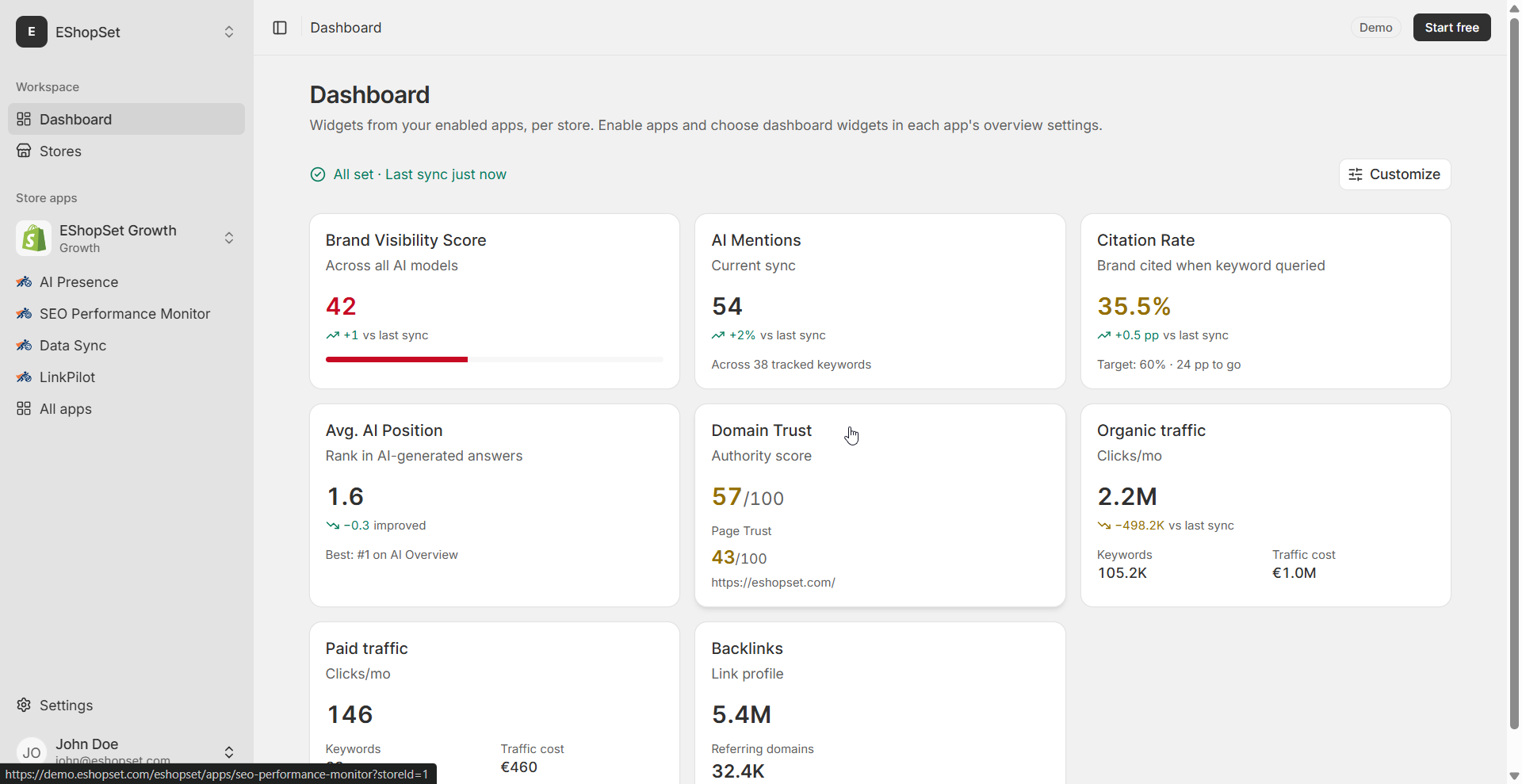
We completely understand the frustration with generic reporting tools like Google Data Studio. They often create more work than they save, especially for the specific, dynamic needs of Shopify SEO. We believe merchants deserve purpose-built solutions that offer deep integration and immediate value. That's why SEO Performance Monitor provides proactive insights and alerts, and AI Presence helps you navigate new search landscapes like AI Overviews, giving you focused, actionable data without the setup headaches.
The Future is Integrated and Intelligent
So, what's the takeaway from this community discussion? It's a clear signal that the days of wrestling with overly complex, generic reporting software for critical tasks like SEO are fading. Shopify merchants need to look for solutions that are specifically designed for their ecosystem, offering automation, real-time alerts, and insights into the evolving search landscape, including how to best track your brand in AI Overviews. By choosing integrated, intelligent tools, you can transform your daily operations from a chore into a strategic advantage, freeing you up to focus on what you do best: growing your business.