AI Content Stealing Your Shopify SEO Rankings? Here's How to Reclaim Your Spot
Hey fellow Shopify merchants! Ever felt that gut punch when a competitor, seemingly out of nowhere, starts snatching up keywords you've worked years to rank for? What if I told you they're doing it with hundreds of 'low-effort AI articles'? That's exactly the dilemma an original poster recently shared in a community discussion, and it sparked a really insightful conversation that I think every one of us needs to hear.
The original poster, who'd enjoyed top rankings in a niche for years, watched as a newer competitor flooded the search results with AI-generated content. 'I can't believe Google considers the bullshit they put out as authority,' they lamented. This isn't just a frustration; it's a real threat to established businesses built on genuine expertise.
The Great Debate: Wait or Act?
The community quickly weighed in, and a clear divide emerged. Some respondents were optimistic, suggesting that these 'AI slop' articles would eventually be wiped out by a Google algorithm update. 'It can rank for a few weeks or months and the next algo update will wipe them out,' one community member commented. This 'play the long game' approach advocates for sticking to quality, building backlinks, and waiting for Google to catch up.
However, others weren't so sure. 'Sadly not a guaranteed thing at all,' one person countered. Another shared a tough lesson: 'lost a solid 6 months once just 'monitoring' and waiting for a spammy competitor to catch a penalty. took me way too long to realize google sometimes just accepts their garbage as the new baseline until you aggressively refresh your own stuff.' This highlights a crucial point: sometimes, waiting isn't an option, and proactive defense is necessary.
The Consensus: Quality, Expertise, and User Value Reign Supreme
While the debate on Google's AI detection capabilities continues, the overwhelming consensus for a robust defense strategy centered on strengthening your own content with genuine value. Here’s what the experts in the thread recommended:
1. Don't Fight Volume with Volume
Trying to match a competitor's output of 10-15 AI articles a day is a losing battle. Instead, focus on fewer, deeper pieces that genuinely serve your audience. As one respondent put it, 'Don't panic-publish. If you do add content, make it fewer, deeper pieces that reinforce your existing topical authority.'
2. Refresh and Enhance Existing Content
If older, established content is getting outranked by newer AI pieces, it might signal that Google is looking for freshness. 'Maybe try refreshing your content?' suggested a community member. This means going back to your high-value pages and updating them with:
- Original Evidence & First-Hand Data: Share unique insights, case studies, or proprietary research that AI can't invent.
- Clearer Answers & Examples: Make your content more helpful and easier to digest.
- Author Expertise (E-E-A-T): Emphasize the experience, expertise, authoritativeness, and trustworthiness behind your content. Real bios, real faces, real experience.
- Real Images: Ditch stock photos for unique, high-quality images that add value.
- Updated Information: Ensure all facts, figures, and product details are current. If you're managing a large product catalog, you might already be using tools for hourly Shopify product sync from Sheets to keep your inventory fresh. This same dedication to automation and accuracy should extend to your content strategy, ensuring your product pages and related content are always up-to-date.
3. Strengthen Internal Linking and Topical Authority
A well-structured site with strong internal linking signals to Google that you're an authority on a topic. 'Focus on building topical authority with in-depth, expert-driven content that covers topics comprehensively,' advised one expert. This means connecting related articles and product pages logically, guiding users (and search engines) through your expertise.
4. Build Quality Backlinks
While AI content might temporarily rank, it often lacks the genuine authority that comes from high-quality backlinks. Focus on earning links from reputable sources. As one respondent asked, 'Are they buying backlinks?' — implying that genuine links are harder to fake and more sustainable.
5. Strategic Use of AI (Yes, Really!)
Interestingly, some respondents acknowledged that AI content creation is evolving. 'It’s simply a matter of time and adaptation,' one person noted, adding that 'content creators who won’t use artificial intelligence in the near future will be in the same position as programmers who still write all their code entirely by hand.' The key here isn't to create 'slop' but to leverage AI for efficiency while infusing human expertise and unique value.
6. Monitor and Analyze
Before making any drastic changes, 'identify what actually changed in the search results,' recommended a community member. Track which URLs replaced yours, analyze search intent, and understand why those pages are currently seen as more useful. This data-driven approach is crucial for an effective response.
EShopSet Team Comment
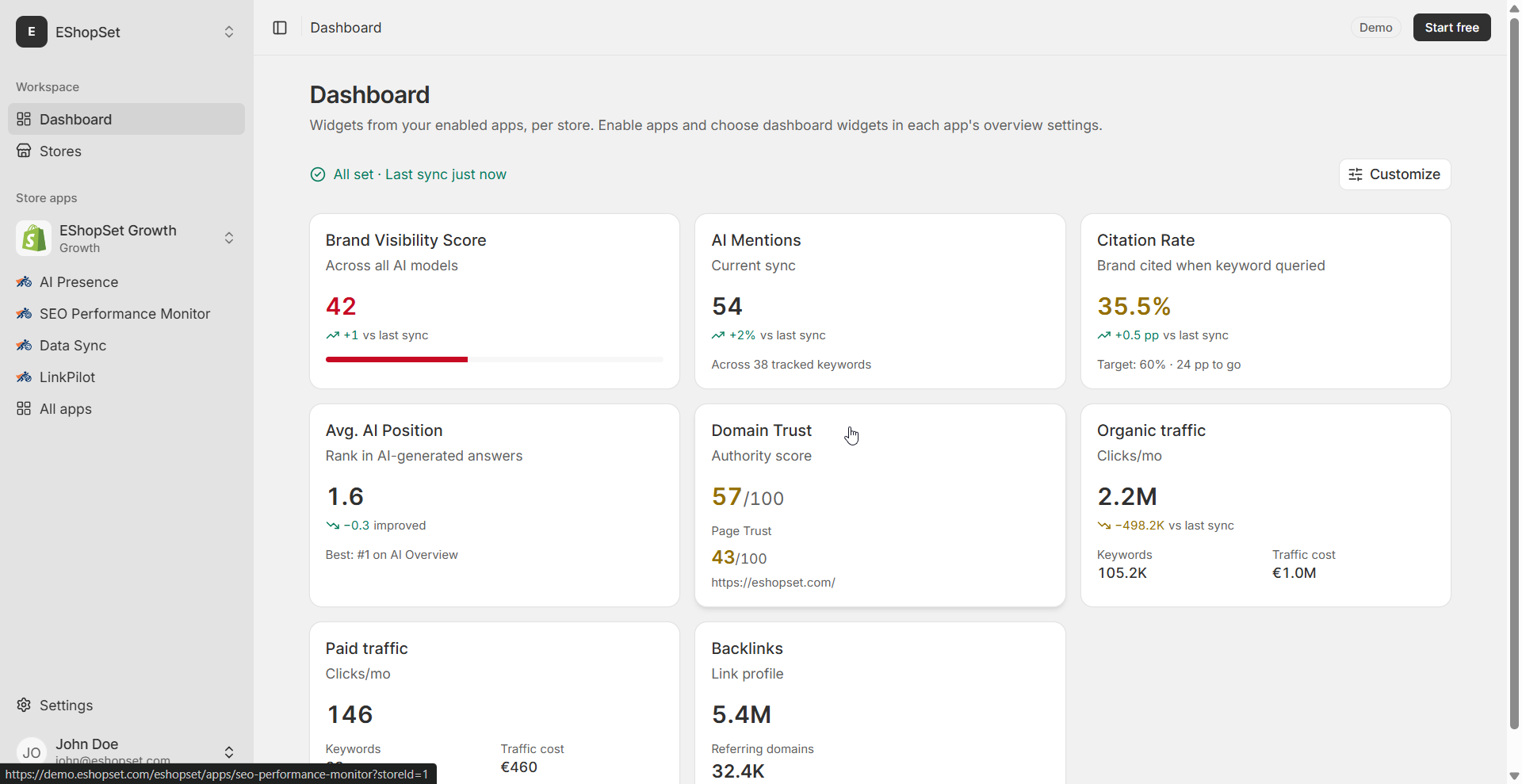
This discussion perfectly captures the current SEO landscape for Shopify merchants. We firmly believe that while AI content can create temporary noise, sustainable success comes from a blend of strategic monitoring and genuine value. Our SEO Performance Monitor is essential for tracking these shifts and understanding competitor moves. For crafting truly unique and authoritative content that AI can't easily replicate, our AI Presence app can assist in generating ideas and outlines, allowing you to focus on adding that crucial human expertise and E-E-A-T. And for ensuring your product data is always fresh and consistent across your store, Sheet2Cart helps you manage your catalog with ease, preventing data discrepancies that can hurt your SEO.
In conclusion, don't let AI content bullies push you around. The path to reclaiming your rankings isn't about matching their volume but about doubling down on what makes your Shopify store unique: your expertise, your quality, and your commitment to providing real value to your customers.