Taming the Multi-Tool Beast: Streamlining Delivery Operations for Ecommerce Agencies
Ever feel like your project management stack is less a streamlined system and more a digital octopus, with tentacles reaching into a dozen different apps? That's exactly the sentiment that kicked off a lively discussion recently in a project management community, where the original poster laid out their daily juggle: Linear, Notion, Slack, Google Docs, and Figma – five tools just to track one medium-sized project.
The kicker? Manual syncing across most of them. Sound familiar? For many of us running or working within ecommerce agencies, this multi-tool dance is a daily reality, often leading to frustration and inefficiency.
The "Tool Count" Myth vs. The Real Pain for Agencies
It’s a question many of us in ecommerce operations and agency life grapple with: "How many tools are too many?" One community member quickly chimed in, echoing the original poster's pain, using Linear, Slack, Docs, and a separate spreadsheet for budget. They even mentioned testing a new tool for consolidation, highlighting the universal quest for a more unified solution.
Another respondent offered a pragmatic view, suggesting that "the count doesn't matter as much as which ones you can actually undo anything in." This highlights a crucial point: it's not just about quantity, but the quality, reliability, and auditability of your chosen tools. Can you easily revert changes? Is there a clear history? These features are vital for maintaining project integrity, especially when client expectations are high.
As one insightful contributor put it, "Five tools is pretty standard but the pain is real. The sync overhead usually outweighs whatever each tool does well." This is where the rubber meets the road for ecommerce agencies. Every minute spent manually updating project statuses across disparate systems is a minute not spent on client work, strategy, or growth. Their advice? "Picking one tool for task tracking and being strict about not letting Notion become a second task manager - that's where most of the duplication comes from." This points to a core problem: tool overlap leading to redundant data entry and conflicting information.
The Hidden Costs of Disjointed Delivery Operations
For ecommerce agencies, the implications of a fragmented tool stack extend far beyond mere inconvenience:
- Reduced Efficiency: Manual syncing, context switching, and searching for information across multiple platforms eat into valuable billable hours.
- Increased Error Rates: Discrepancies between tools lead to mistakes in project timelines, budget tracking, and client communication.
- Client Dissatisfaction: Delays, miscommunications, or missed deadlines due to internal operational issues can damage client trust and retention.
- Lack of Transparency: It becomes challenging to get a holistic view of project health, team workload, and overall agency performance.
- Stifled Growth: Without streamlined processes, scaling the agency becomes a constant uphill battle, as every new project adds more complexity to an already strained system.
Another community member highlighted how they manage different levels of tracking – high-level schedules in one tool, detailed WBS and risk in another, and task-level tracking in a third. While this approach can work, it relies heavily on "update meetings" to sync information, underscoring the manual effort required to bridge the gaps between tools.
The HubSpot Advantage: Unifying Your Ecommerce Agency Stack
At EShopSet, we believe that the solution isn't necessarily fewer tools, but smarter integration and a powerful central hub. For ecommerce agencies, HubSpot offers a robust foundation to consolidate many of these disparate functions, especially when paired with specialized operational workspaces like EShopSet.
Consider HubSpot CRM as your agency's single source of truth. Instead of client data, communication logs, and project requirements scattered across Slack, Google Docs, and various project trackers, HubSpot brings it all together:
- Centralized Client Data: From initial lead in Sales Hub to ongoing project delivery, all client interactions, contracts, and historical data reside in the CRM. This eliminates the need for separate spreadsheets or notes files for client-specific information.
- Streamlined Sales-to-Delivery Handover: With Sales Hub, project scopes, client expectations, and key deliverables captured during the sales process flow seamlessly into your project planning, reducing miscommunication and manual data transfer.
- Commerce and Storefront Project Management: For agencies specializing in building or optimizing ecommerce storefronts, HubSpot's Commerce capabilities, combined with robust integrations, can help manage product data, order fulfillment processes, and client-specific ecommerce workflows directly within the platform.
- Enhanced Communication & Collaboration: While Slack remains vital for instant communication, project-specific discussions, decisions, and file sharing can be linked directly to client records or tasks within HubSpot, providing context and an audit trail.
The key is to leverage HubSpot's extensive integration marketplace and API capabilities. Instead of trying to force one tool to do everything, identify your core needs and integrate best-of-breed solutions where necessary, ensuring data flows automatically.

EShopSet: Empowering Your Delivery Operations with HubSpot
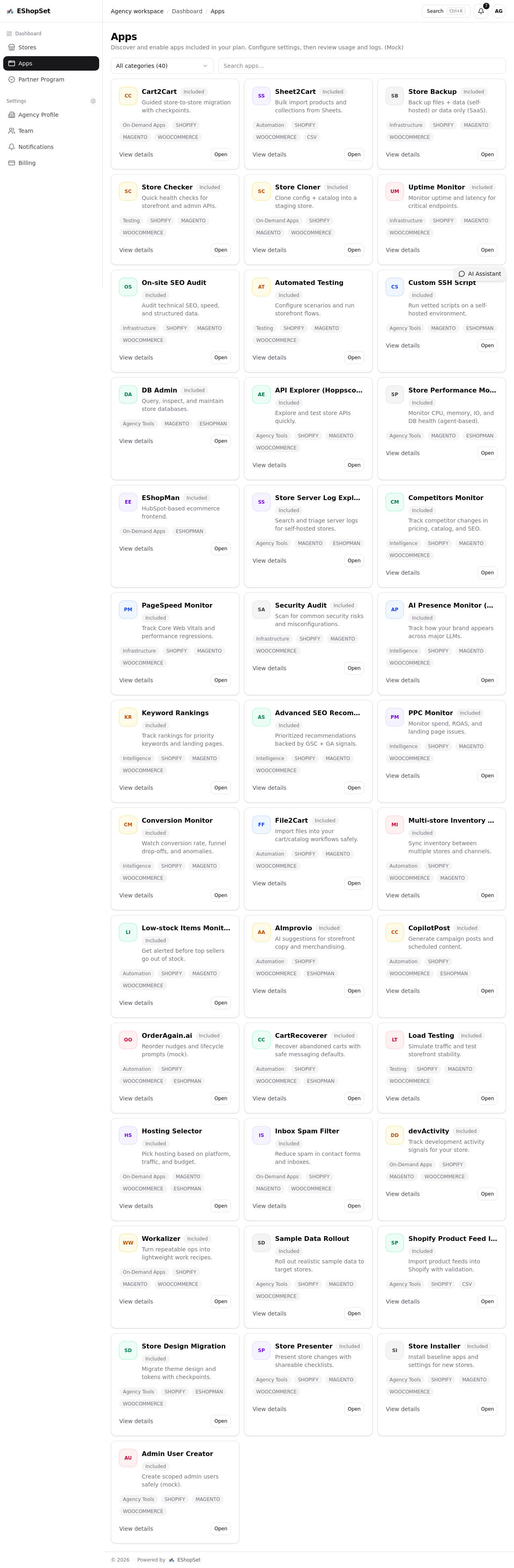
This is where EShopSet comes in. We act as the operational workspace that supercharges your HubSpot investment for agency delivery teams. While HubSpot provides the central CRM, EShopSet layers on the specific project management, task automation, and client reporting functionalities that ecommerce agencies need to execute flawlessly.
We help agencies:
- Build and Deploy workflow templates for agencies: Standardize your project delivery processes, from client onboarding to campaign launch, ensuring consistency and efficiency across all projects.
- Automate Routine Tasks: Reduce the manual sync overhead that the original poster highlighted by automating status updates, client notifications, and internal handoffs based on triggers within HubSpot.
- Gain Real-time Visibility: Get a clear, consolidated view of all active projects, team workloads, and key performance indicators, eliminating the need to cross-reference multiple tools for project status.
- Improve Client Communication: Provide clients with transparent access to project progress and deliverables without giving them access to your internal tools, fostering trust and reducing administrative burden.
By integrating deeply with HubSpot, EShopSet ensures that your project data, client communications, and operational workflows are unified. This approach aligns with the RevOps philosophy, ensuring that your sales, marketing, and service teams are all working from a single, consistent source of truth, leading to a more cohesive client journey and more profitable projects.

Actionable Steps for Consolidating Your Agency's Tool Stack
Taming the multi-tool beast requires a strategic approach. Here’s how ecommerce agencies can start:
- Audit Your Current Stack: List every tool used for project tracking, communication, and client management. Identify overlaps and redundancies.
- Define Your Core Needs: What are the absolute essential functions your agency needs from its tools? Prioritize features like task management, client communication, file sharing, and reporting.
- Choose a Central Hub: For ecommerce agencies, HubSpot is an ideal candidate due to its comprehensive CRM, Sales Hub, and Commerce capabilities. Commit to using it as your primary system of record.
- Leverage Integrations Smartly: Instead of manual syncing, explore HubSpot's marketplace for integrations with specialized tools (like design or development platforms) that automatically transfer data.
- Implement workflow templates for agencies: Standardize your project delivery processes. This not only improves efficiency but also makes it easier to onboard new team members and scale your operations.
- Train Your Team: Ensure everyone understands the new consolidated workflow and the importance of maintaining data integrity within the chosen systems.
Conclusion
The pain of juggling five, six, or even more tools for a single project is real for many ecommerce agencies. The community discussion highlighted not just the frustration, but the universal desire for a more integrated, less cumbersome approach to project management. By strategically leveraging a powerful platform like HubSpot as your central nervous system and enhancing it with specialized operational workspaces like EShopSet, you can move beyond manual syncing and fragmented data. It's time to transform your delivery operations from a chaotic octopus into a streamlined, efficient machine, ready to scale and deliver exceptional results for your ecommerce clients.